
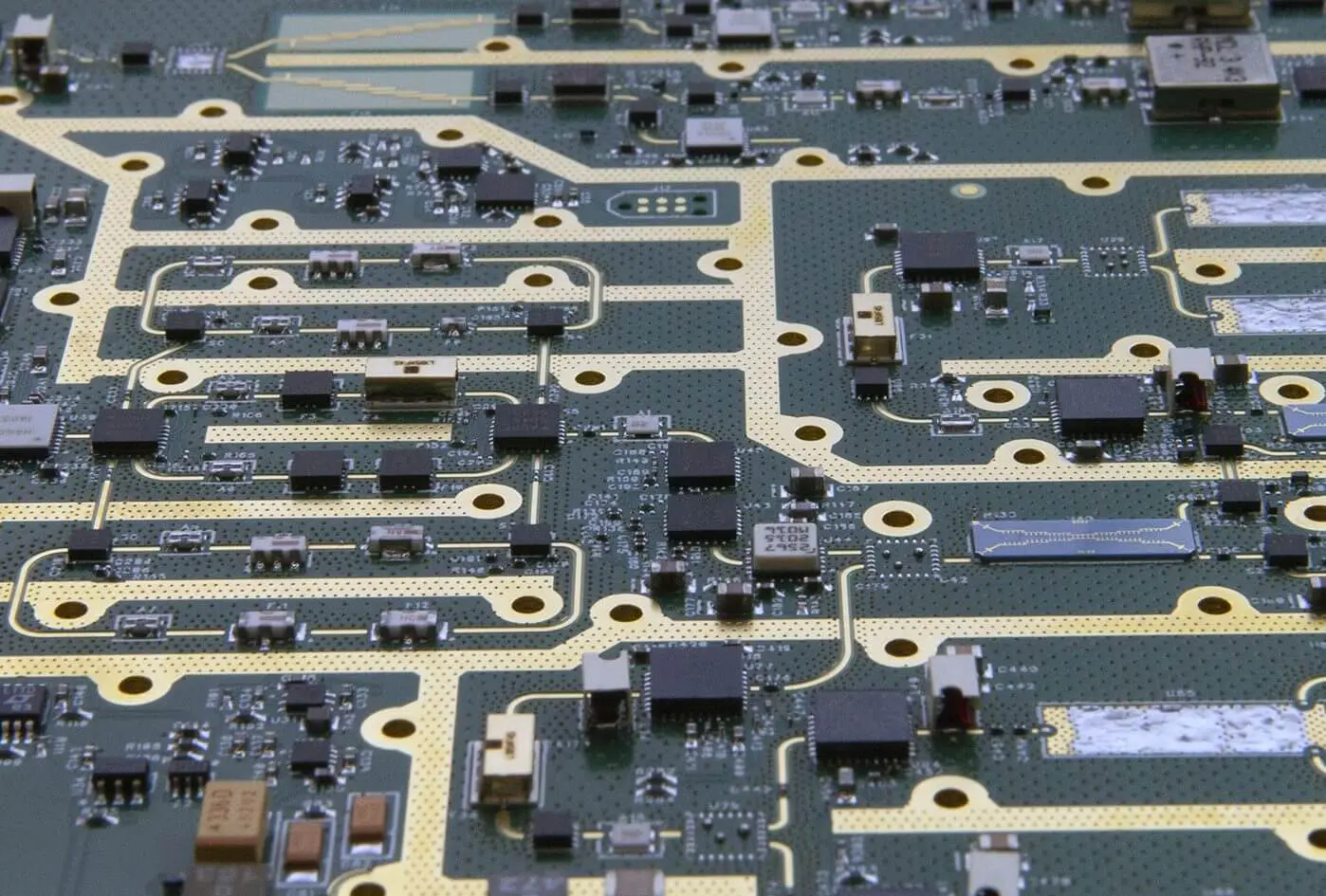
Yes, using palladium (likely what you mean by “palladium”) in PCB manufacturing—particularly in ENIG (Electroless Nickel Immersion Gold) finishes—can be detrimental for high-frequency applications (e.g., RF/microwave circuits above ~1 GHz). Here’s why, broken down clearly:
Key Issue: Signal Loss from Nickel-Phosphorus Layer
- ENIG Process: PCBs get a thin nickel-phosphorus (NiP) layer (~3-6 μm) topped with immersion gold (~0.05-0.1 μm). Palladium is sometimes used as a catalyst to initiate electroless nickel plating or in hybrid finishes like ENEPIG (Electroless Nickel Electroless Palladium Immersion Gold).
- High-Freq Problem: The NiP layer acts as a lossy dielectric and conductor:
- Skin Effect: At high frequencies, signals travel on conductor surfaces. Nickel has higher resistivity (
“) and surface roughness than copper
“), increasing insertion loss by 1-3 dB/inch at 10 GHz+.
- Dielectric Losses: Phosphorus content (8-12%) creates a semi-insulating layer, absorbing RF energy via eddy currents and magnetic losses.
- Measurements: Studies (e.g., IPC standards, IEEE papers) show ENIG adds ~20-50% more attenuation vs. bare copper or low-loss finishes at 5-40 GHz.
- Skin Effect: At high frequencies, signals travel on conductor surfaces. Nickel has higher resistivity (
Evidence from Industry Data
| Finish Type | Typical Loss at 10 GHz (dB/inch) | High-Freq Suitability |
| Bare Copper (with protection) | 0.1-0.3 | Excellent |
| ENIG (Ni/Au) | 0.5-1.0 | Poor (signal degradation) |
| ENEPIG (Ni/Pd/Au) | 0.4-0.8 | Slightly better than ENIG, but still lossy |
| Immersion Silver (IAg) | 0.2-0.4 | Good |
| OSP (Organic Solderability Preservative) | 0.1-0.3 | Best for minimal loss |
- Real-World Impact: In 5G/mmWave boards (28 GHz+), ENIG can cause >10% signal integrity loss, leading to higher bit error rates (BER) in SerDes or RF chains. Palladium in ENEPIG reduces some black pad defects but doesn’t eliminate nickel’s losses.
When It’s Not Detrimental
- Low-Freq Apps (<1 GHz, e.g., DC power, digital logic): Fine—ENIG excels in solderability, shelf life (1+ year), and wire bondability.
- Palladium’s Role: Pure palladium plating (rare, expensive) has decent conductivity (
“) but isn’t common; it’s more a barrier layer.”
Recommended Alternatives for High-Freq PCBs
- Soft Gold or Hard Gold: Thicker gold plating over copper—low loss, but costly.
- Immersion Tin (ISn) or Silver: Better RF performance, cheaper than gold.
- Direct Bond Copper (DBC) or Exposed Copper: With conformal coatings for protection.
- Design Mitigations:
- Use microstrip/stripline with low-Dk laminates (e.g., Rogers RO4000 series).
- Score/etch off finish layers on critical traces.
- Simulate with tools like HFSS or ADS to quantify losses.
Sources & Further Reading
- IPC-4552/4556 standards on ENIG/ENEPIG.
- Papers: “RF Performance of PCB Finishes” (IPC APEX Expo), Microwave Journal articles on skin effect losses.
- Test it: Measure S-parameters (S21) on coupons—expect clear differences.